
Building Healthier Hearts Across Georgia
A community-led cardiovascular health initiative working across six Georgia counties to prevent heart disease, improve access to care, and address the conditions that shape heart health.
Clayton • Macon • Muscogee • Randolph — with Dougherty and Richmond joining in the next program year.
Find Your County
Our Approach
Get Involved
About this Initiative
The Georgia Cardiovascular Health Learning Collaborative (LC) is supported by the Centers for Disease Control and Prevention (CDC) through the National Cardiovascular Health Program. The Collaborative brings together public health agencies, healthcare providers, community organizations, community members, and other partners who are working to improve heart health across Georgia.
The Learning Collaborative focuses on learning from one another, listening to community voices, and working together to improve heart health. Partners from healthcare, public health, and community organizations work together to prevent heart disease by preventing and controlling related conditions such as high blood pressure, high cholesterol, and stroke. The Collaborative values the important role that local organizations and community members play in creating solutions that work for their communities.
The goals of the Learning Collaborative include:
- Focus on communities most affected by heart disease and related conditions, including high blood pressure, high cholesterol, and stroke.
- Reduce health differences by addressing barriers such as limited access to healthcare, differences in the quality of care, and social and economic challenges.
- Improve heart health outcomes by using proven strategies that respect the needs and experiences of communities while connecting healthcare services with community support and resources.
County Selection
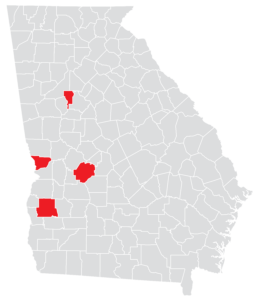
The Georgia Cardiovascular Health Learning Collaborative is building six county-wide collaboratives across Georgia, including two rural counties and four urban counties. The following counties were selected as priority areas for this work: Clayton, Macon, Muscogee, Randolph, Richmond, and Dougherty Counties.
How Were the Counties Selected?
These counties were chosen using health data and community information to identify areas with high rates of heart disease and the greatest need for support. The Collaborative reviewed information about high blood pressure, heart disease, high cholesterol, and stroke to better understand which communities are most affected by cardiovascular disease.
The selection process also looked at challenges that can make it harder for people to stay healthy or get healthcare, including high poverty levels, limited access to health insurance, higher rates of disability, and social and economic challenges that can affect health and access to care.
The Collaborative also reviewed stroke rates and hospitalizations to help ensure that resources and support are focused on communities with a high burden of cardiovascular disease and related health problems.
The Learning Collaborative is the connective tissue of this initiative. It brings together all county Collaboratives, Mosaic Group, and content experts — through virtual and in-person convenings to share lessons learned, exchange resources, and advance shared goals.
Each county operates independently and reflects its own community’s priorities. The Learning Collaborative is how those independent efforts strengthen one another: a Clayton Heart Hub workflow innovation gets adapted in Macon; a Muscogee produce prescription model informs a nutrition strategy in Randolph; a Macon follow-up workflow reaches a new audience elsewhere.
Visit any of the four County Learning Collaborative pages to learn more information:
Clayton, Macon, Muscogee, and Randolph Counties
About this Initiative
The Georgia Cardiovascular Health Learning Collaborative (LC) is supported by the Centers for Disease Control and Prevention (CDC) through the National Cardiovascular Health Program. The Collaborative brings together public health agencies, healthcare providers, community organizations, community members, and other partners who are working to improve heart health across Georgia.
The Learning Collaborative focuses on learning from one another, listening to community voices, and working together to improve heart health. Partners from healthcare, public health, and community organizations work together to prevent heart disease by preventing and controlling related conditions such as high blood pressure, high cholesterol, and stroke. The Collaborative values the important role that local organizations and community members play in creating solutions that work for their communities.
The goals of the Learning Collaborative include:
- Focus on communities most affected by heart disease and related conditions, including high blood pressure, high cholesterol, and stroke.
- Reduce health differences by addressing barriers such as limited access to healthcare, differences in the quality of care, and social and economic challenges.
- Improve heart health outcomes by using proven strategies that respect the needs and experiences of communities while connecting healthcare services with community support and resources.
County Selection
The Georgia Cardiovascular Health Learning Collaborative is building six county-wide collaboratives across Georgia, including two rural counties and four urban counties. The following counties were selected as priority areas for this work: Clayton, Macon, Muscogee, Randolph, Richmond, and Dougherty Counties.
How Were the Counties Selected?
These counties were chosen using health data and community information to identify areas with high rates of heart disease and the greatest need for support. The Collaborative reviewed information about high blood pressure, heart disease, high cholesterol, and stroke to better understand which communities are most affected by cardiovascular disease.
The selection process also looked at challenges that can make it harder for people to stay healthy or get healthcare, including high poverty levels, limited access to health insurance, higher rates of disability, and social and economic challenges that can affect health and access to care.
The Collaborative also reviewed stroke rates and hospitalizations to help ensure that resources and support are focused on communities with a high burden of cardiovascular disease and related health problems.
The Learning Collaborative is the connective tissue of this initiative. It brings together all county Collaboratives, Mosaic Group, and content experts — through virtual and in-person convenings to share lessons learned, exchange resources, and advance shared goals.
Each county operates independently and reflects its own community’s priorities. The Learning Collaborative is how those independent efforts strengthen one another: a Clayton Heart Hub workflow innovation gets adapted in Macon; a Muscogee produce prescription model informs a nutrition strategy in Randolph; a Macon follow-up workflow reaches a new audience elsewhere.
Visit any of the four County Learning Collaborative pages to learn more information:
Clayton, Macon, Muscogee, and Randolph Counties
Our Approach
Community-Led
Each collaborative is shaped by the residents, organizations, and leaders who know their community best. We build on existing strengths rather than importing outside solutions.
Data-Informed
Every strategy is grounded in local health data and community health needs assessments conducted at the census-tract level to identify and reach those at highest risk.

Continuously Improving
Collaboratives meet monthly and use the Plan-Do-Study-Act (PDSA) quality improvement cycle to test, learn from, and refine their work. Every event becomes data that strengthens the next.

Cross-Sector
Our Collaboratives unite public health, health systems, clinical providers, faith-based organizations, schools and universities, businesses, libraries, food access partners, and residents in shared action.
Impact by the Numbers
4
Active County Collaboratives (growing to 6 in 2026)
100+
Community Partners at the table
650+
Blood Pressure Screenings Delivered
~1/3
of screened participants Showing BP Improvement
How to Get Involved
Improving heart health takes everyone working together. We welcome community members, community organizations, and healthcare providers to join the Georgia Cardiovascular Health Learning Collaborative.
Community Members
You can help improve heart health in your community by:
- Becoming a Healthy Heart Ambassador and sharing heart health information with others
- Volunteering at health screenings or educational events
- Attending a collaborative meeting in your county
Community Organizations
Community organizations can support this work by:
- Hosting or helping with community health screening events at churches, schools, workplaces, or other community locations
- Connecting people to free health screenings, prevention programs, and local resources
- Attending a collaborative meeting in your county
Healthcare Providers and Health Systems
Healthcare providers and health systems can participate by:
- Helping connect patients to community programs and resources for ongoing support
- Providing healthcare services that support heart health and disease prevention
- Working with partners to improve systems and services that help people receive better care
- Attending a collaborative meeting in your county
How to Get Involved
Improving heart health takes everyone working together. We welcome community members, community organizations, and healthcare providers to join the Georgia Cardiovascular Health Learning Collaborative.
Community Members
You can help improve heart health in your community by:
- Becoming a Healthy Heart Ambassador and sharing heart health information with others
- Volunteering at health screenings or educational events
- Attending a collaborative meeting in your county
Community Organizations
Community organizations can support this work by:
- Hosting or helping with community health screening events at churches, schools, workplaces, or other community locations
- Connecting people to free health screenings, prevention programs, and local resources
- Attending a collaborative meeting in your county
Healthcare Providers and Health Systems
Healthcare providers and health systems can participate by:
- Helping connect patients to community programs and resources for ongoing support
- Providing healthcare services that support heart health and disease prevention
- Working with partners to improve systems and services that help people receive better care
- Attending a collaborative meeting in your county